Portfolio → AI image
Deciding what “right” looks like
Six rounds of local experiments turned “make it look good” — which no model can act on — into a written specification precise enough that the final render came back right the first time.
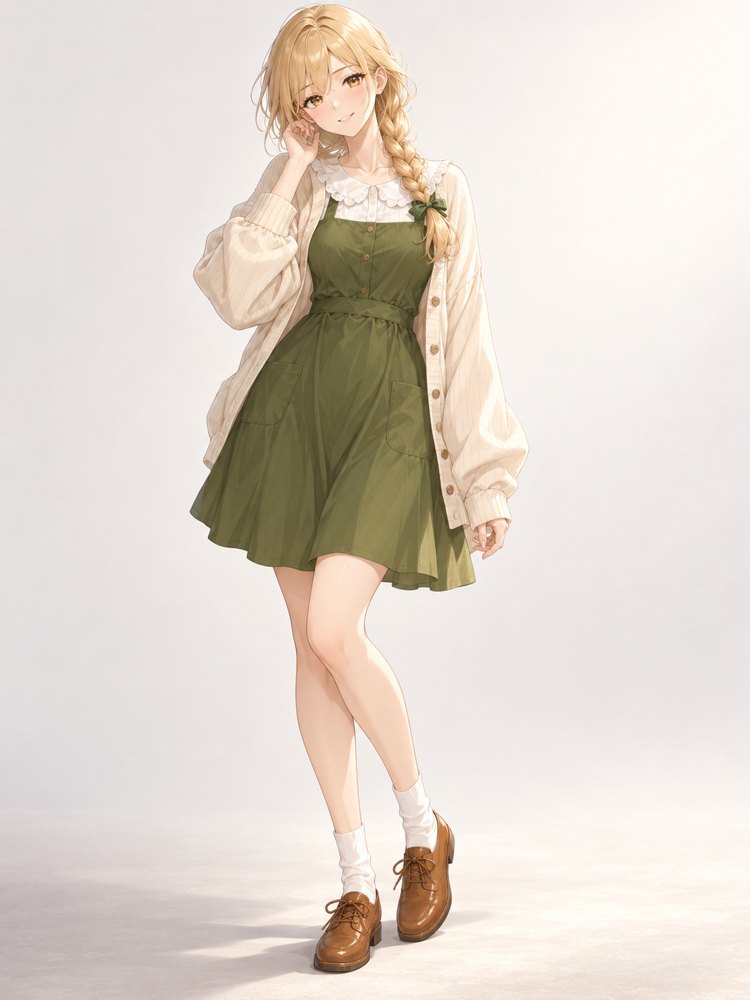
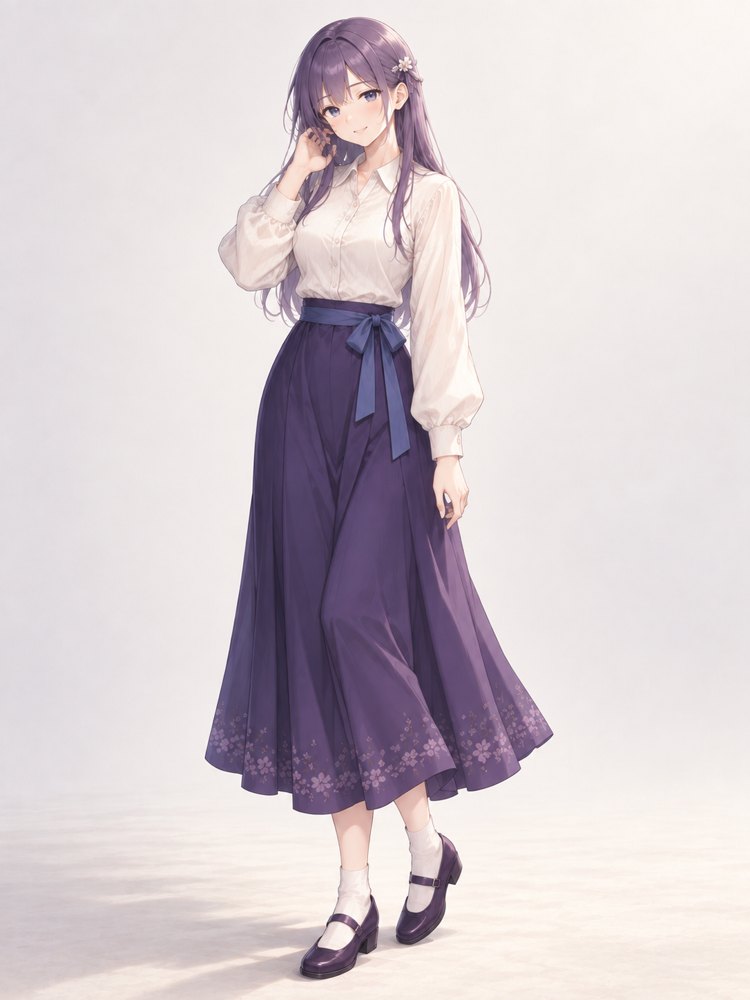
Changing a character's pose or proportions can also change their identity. A high similarity score can miss the wrong hair or clothing colour.
I directed the experiments, specified identity and proportions, and set acceptance criteria from the results. Image models generated the artwork; the final illustrations used a hosted model.
Read the experiment findings, the four-part character specification, and the palette check and its limits.
The two finished illustrations were rendered by a hosted frontier image model. What the local work produced is the specification — the exact wording, proportions, materials and failure modes the render was given — and the measurements behind it.
Six experiments, one variable each
| # | Question | Answer | Into the spec |
|---|---|---|---|
| 1 | How much does “denoise” preserve? | Depends on the image: 0.45 painted, 0.60 flat | Measure per image; never copy a number from a guide |
| 2 | Can an edit model borrow a face from another picture? | It borrows the expression and lighting too | Identity is described in words, not borrowed |
| 3 | Does a colour reference help a colour-only change? | No — and the wrong result scored 0.958 vs 0.965 | Similarity can't see this error; a palette check can |
| 4 | Can an edit turn chibi into adult proportions? | Stops at six heads; push harder and the character breaks | Proportion change is a generation job, not an edit |
| 5 | Are “15 / 20 / 25 years old” useful words? | 20 and 25 came back identical; “mature” just adds makeup | Specify structure: head-to-body ratio, jaw, eye size |
| 6 | Does a newer base model fix proportions? | Yes, first try, 12–24 s — but references alone still fail | Description leads; a reference image only supports |
Read the full findings
Round 1. Measured with SSIM: on a painted image the picture starts changing at denoise 0.45; on a flat-coloured one it holds to 0.60. The encoder alone caps similarity at 0.98–0.996.
Round 2. An edit model given “this face from that other picture” brings that picture's expression and lighting with it, and the fast 8-step variant drifts to one default face.
Round 3. Words-only kept everything else intact; the attached colour reference dragged its own character's hair colour and braid into the image — and the wrong result scored SSIM 0.958 against 0.965 for the right one.
Round 4. Identity and outfit held perfectly, but the body stopped at about six heads. Pushing harder (full model, higher guidance) finally moved the body and broke the character: hair colour changed, the pinafore became a pencil skirt, the linework turned Western.
Round 5. 15 separated clearly; 20 and 25 came back nearly identical. Asking for “mature” only added makeup.
Round 6. A newer base model gave correct adult proportions on the first attempt, 12–24 seconds per image. Reference images alone still failed three ways: ignored entirely, turned into a turnaround sheet, or the outfit replaced.
Four blocks, so only one changes at a time
Identity — exact
Every defining element named: hairstyle and its ribbon, eye colour, each garment's cut, colour and details. Anything vague gets redrawn next time.
Proportions — structure
Seven to seven and a half heads; small head, long legs, defined waist; adult jaw, eyes at natural size. Not chibi, not fashion-elongated.
Pose — one sentence
Relaxed three-quarter stance, weight on one leg, one hand at her hair. Everything else stays byte-identical between poses.
Rendering — what looks drawn
Clean lineart, painterly shading, no plastic gloss, fabric that differs by material, detailed hands, soft studio light, whole body in frame.
Deliberately left out, because the rounds showed it doesn't help: quality-tag stacking, long negative-prompt lists, style references for colour work, and the word “mature” on its own.
The score that couldn't see the error, and the one that could
- Dropped: similarity scoring (SSIM) as a gate — it rated a wrong-coloured result 0.958 against 0.965 for the right one
- Kept: a palette check that separates same-character from different-character by a factor of three
- The final render was handed to the strongest hosted image model available. The transferable work is the specification and the acceptance criteria — knowing what to ask for, and how to tell whether you got it
- Next: these two characters are the subjects of my next video production
What exists, what's measured, what isn't claimed
Built
- A four-block character specification that reproduces the same character across poses
- A palette check that flags design drift automatically
- Six recorded rounds, one variable each, with parameters and conclusions
Measured
- Denoise thresholds per image type (0.45 painted, 0.60 flat)
- Encoder similarity ceiling: 0.98–0.996
- Palette distance: 3.8–6.6 same character vs 19.0–20.3 different character
Not claimed
- The final illustrations were not rendered locally
- The palette check is unusable on busy scene art
- No public repo — the scripts stay private